Berlin Police Headquarters
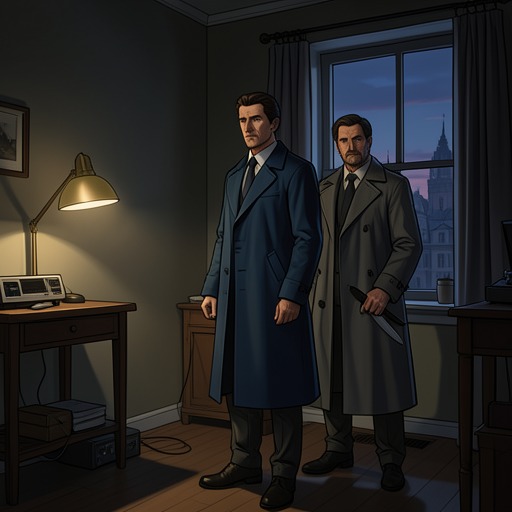
Berlin AlexanderplatzBerlin Police Headquarters, on Alexanderplatz, is where a police operation against the Alexanderquelle pub ends in the arrest and processing of Franz Biberkopf. The headquarters is more than a backdrop to the capture: its courtyard, corridors, and lock-up mark the transition from the crowded city into police custody, and from there toward institutional observation at Buch.
Setting on Alexanderplatz
The headquarters stands amid an intensely used urban space. At Alexanderplatz, the road is being torn up for the underground railway, and people cross on planks while tramcars pass through the square. Shops and businesses fill the surrounding buildings, setting the police institution within a landscape of transit, commerce, and public movement.
That movement gives the location a particular contrast in the narrative. Tram routes connect distant districts, while the headquarters gathers people into a controlled administrative space. During the raid, police vehicles cross Alexanderplatz and turn toward their destination; passersby see them briefly and understand that a criminal operation is under way, but the city’s ordinary activity continues around them.
The raid and Franz’s arrest
The police operation is prepared at the headquarters. In its courtyard, officers discuss the expected transport vehicle and its delay. When the vehicles arrive, detectives, inspectors, and policewomen board a truck and set off for the raid. The departure is presented as an organized deployment of law enforcement, even as the vehicle moves through ordinary traffic and the people inside appear at ease.
After the operation at the Alexanderquelle pub, Franz is brought back to the headquarters in the same police operation. He has been arrested after firing shots during the raid. The investigation identifies him as a particularly significant capture: he has an artificial right arm and a grey wig, and the disguise, considered alongside a photograph held by police, leads to his identification as a suspect in the murder of Emilie Parsunke in Freienwalde. His earlier record and failure to register with police add to the authorities’ interest in him.
Intake, questioning, and detention
At the headquarters, those taken in during the raid are unloaded in groups and led up a small rear staircase into a broad corridor. Women are separated into another room. Officers search detainees and check their papers; people whose documents are in order may be released through a barrier, while others wait as police make inquiries. The procedures include recording identifying details, arrest circumstances, and property, and checking addresses and official records.
Franz is presented last and remanded in custody. At first, police suspect that he may be pretending to be mentally ill to avoid further consequences. A doctor examines him, however, and the lack of response continues after he is transferred to the prison hospital. After he refuses food, authorities send him to Buch Asylum for observation. The headquarters is thus the first stage in a chain of custody that carries him from the raid into medical and secure institutional care.
Narrative significance
The headquarters gives the police operation a procedural aftermath. The arrest does not end with Franz’s removal from the pub: it opens into document checks, searches, questions, and decisions about detention. The shift from Alexanderplatz’s open traffic and public crowds to the controlled interior of the headquarters makes institutional power visible through the handling of bodies, papers, and movement.
Its position in the city also links two kinds of motion. Trams and pedestrians continually cross the square, but once the raid brings Franz inside, his movement is directed by police procedure and then by further transfers. The headquarters stands at the point where the urban scene of everyday circulation becomes a route through custody.